How to Calculate Wine Nutritional Values for EU Labels
EU Regulation 2021/2117 requires all wine sold in the European Union to carry a nutritional declaration — mandatory since 8 December 2023. To calculate wine nutritional values, you need four inputs: alcohol content (% vol.), sugar (g/L), organic acids (g/L), and polyols such as glycerol (g/L). These are converted using standard energy factors and expressed per 100 ml.
This article covers the calculation method, required format, tolerances, and practical tools. For a full overview of EU wine labelling, see our comprehensive guide.

Why Is Nutritional Information Required on EU Wine Labels?
EU Regulation 2021/2117 extended food-labelling transparency rules to wine for the first time, requiring every wine sold in the EU to disclose its nutritional content.
Before December 2023, wine was exempt from the nutritional labelling obligations that applied to all other food and drink products. Commission Notice C/2023/1190 provides supplementary guidance on implementation, including how to determine values. See the key updates from November 2023 for a timeline.
What Nutritional Values Must Appear on Wine Labels?
At minimum, energy value in kJ and kcal per 100 ml must appear on the physical label — using the shorthand "E: 259 kJ / 62 kcal (per 100 ml)." The full declaration includes:
Nutrient | Unit |
Energy | kJ and kcal |
Fat (of which saturates) | g |
Carbohydrate (of which sugars) | g |
Protein | g |
Salt | g |
Key fact: If any nutrient amount is negligible, it is sufficient to state "Contains negligible amounts of..." rather than listing zero values.
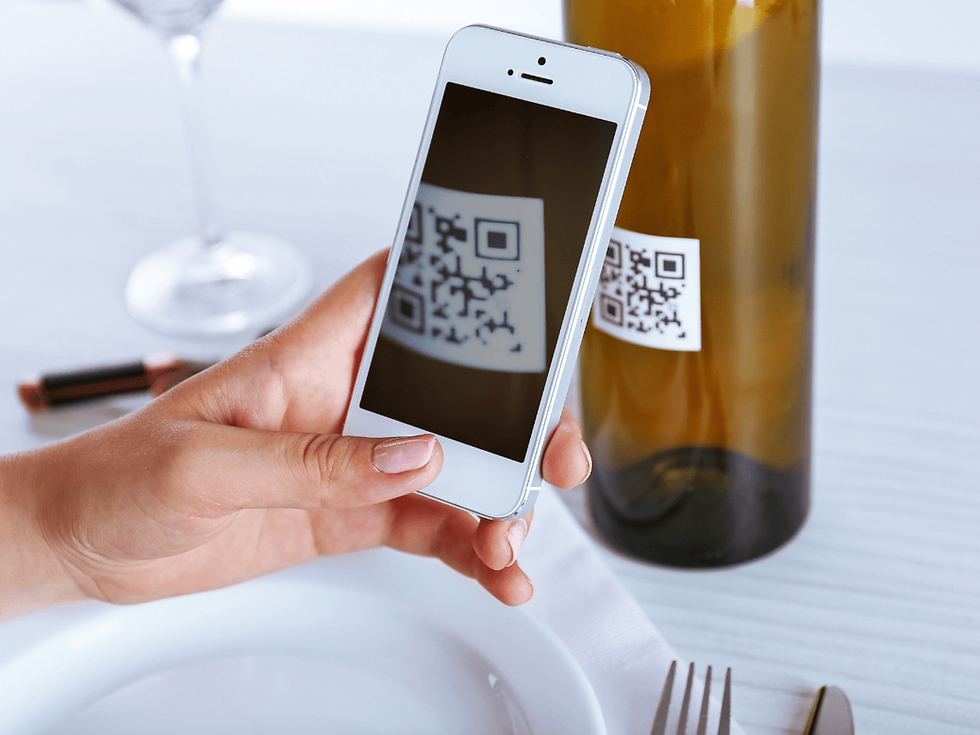
The full declaration can appear on the physical label or via QR code. All values must be per 100 ml — no other format is acceptable.
How Do You Calculate Wine Energy Values?
Wine energy is calculated from four inputs, each multiplied by its conversion factor:
1. Alcohol (% vol.) — 29 kJ/g
2. Residual sugar (g/L) — 17 kJ/g
3. Organic acids (g/L) — 13 kJ/g
4. Polyols / glycerol (g/L) — 10 kJ/g
The results are summed and expressed per 100 ml.
Key fact: Values can be determined through lab analysis, calculation from known ingredient data, or generally established data — as clarified in Commission Notice C/2023/1190.
Most wineries already track alcohol, sugar, and acid levels during production. Winefo includes a built-in energy calculator: enter the four values and it calculates the full nutritional declaration in seconds. At EUR 250/year with unlimited labels, it removes manual work entirely. Create your first compliant labels in minutes.
What Display Format Is Required?
On the physical label: tabular format with aligned numbers. Linear (text) format is permitted only if space is limited.
Via QR code: tabular format with aligned numbers is mandatory — no linear alternative is allowed.
What Tolerances Apply?
Values must represent averages reflecting natural production variations, not precise measurements per bottle. Tolerances are defined in Article 44 of Delegated Regulation (EU) 2019/33. Values must refer to the wine's state of sale — important for aged wines. Batch-to-batch variation is expected.
For related requirements, see our guides on allergen labelling and additives.
Frequently Asked Questions
How do I calculate wine nutritional values for EU compliance?
You need four inputs: alcohol (% vol.), residual sugar (g/L), organic acids (g/L), and glycerol (g/L). Multiply each by its energy factor, sum the results, and express per 100 ml. Winefo's built-in calculator automates this in seconds.
What nutritional information is required on EU wine labels?
Energy in kJ and kcal per 100 ml must appear on the physical label. The full declaration — energy, fat, saturates, carbohydrate, sugars, protein, salt — can appear on-label or via QR code. Mandatory since 8 December 2023 under EU Regulation 2021/2117.
Can nutritional values be displayed only via QR code?
Energy value must always appear on the physical label. The remaining details can be provided via QR code, but must use tabular format — the linear option permitted on physical labels is not allowed digitally.
Do I need laboratory testing for every wine?
No. Values can be determined through lab testing, calculation from known production data, or generally established data. Most wineries already have the necessary inputs from standard production tracking.
How do I add nutrition declarations to wine labels in Spain?
The requirements are identical across all EU member states. Display energy (kJ/kcal per 100 ml) on the physical label and provide the full declaration on-label or via QR code. Winefo serves nearly 1,000 wineries across four continents — see how to achieve compliance in three steps or comply with EU wine labelling in 2026.