Wine Labelling in Spain: Compliance Guide for Bodegas
EU Regulation 2021/2117 requires every winery selling wine in the European Union to include a nutritional declaration, a full ingredient list, and allergen information on each label. The regulation has been in force since 8 December 2023 and applies to all wines from the 2024 harvest onward. In Spain — the EU's largest wine-producing country by vineyard area — the Agencia de Informacion y Control Alimentarios (AICA) is the authority responsible for enforcing compliance in the wine sector.
This guide answers the most common labelling questions Spanish bodegas face. For a full overview of EU wine labelling, see our comprehensive guide.

What Information Must Appear on Wine Labels in Spain?
Every wine label must display the energy value in kilojoules (kJ) and kilocalories (kcal) per 100 ml on the physical label. The full nutritional declaration and ingredient list — including allergens such as sulphites, egg-derived fining agents, and milk-derived fining agents — can appear on the physical label or via QR code.
Key fact: Allergens must always be visually highlighted, whether they appear on the physical label or on the digital page linked via QR code.
Labels must also include pre-existing mandatory elements: designation of origin, alcohol content, volume, lot number, importer or bottler, and country of origin. See how to calculate wine nutritional values for each product.
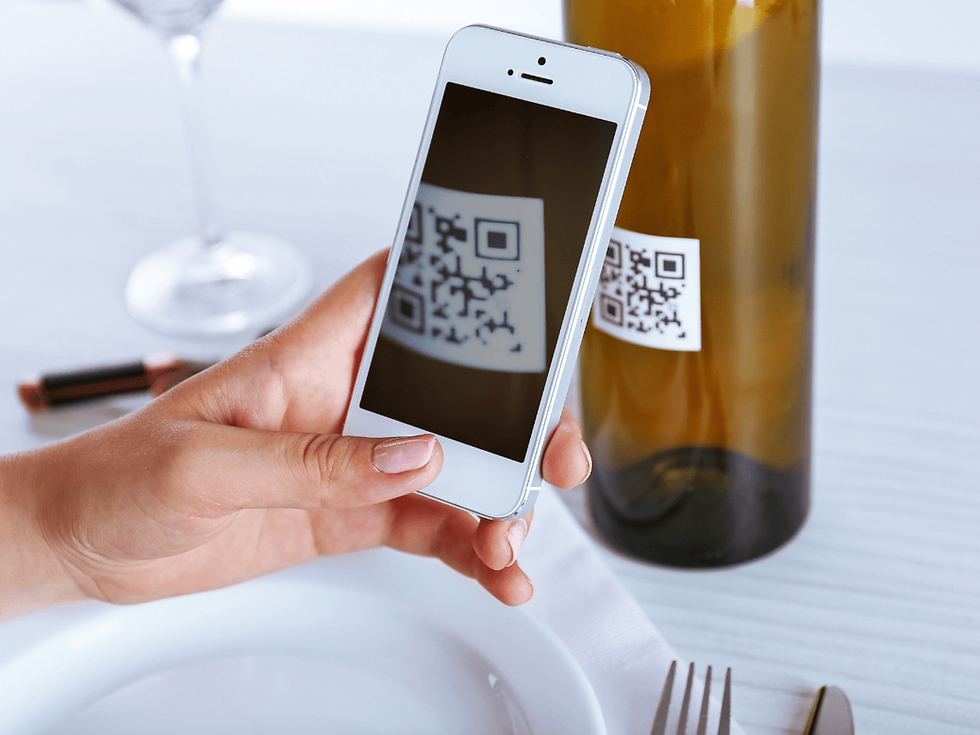
Is a QR Code Mandatory on Wine Labels?
A QR code is not technically mandatory, but it is the practical solution adopted by the vast majority of bodegas. If a winery chooses not to use a QR code, it must print the full ingredient list, all additives, and the complete nutritional declaration on the physical label — in every official language of the markets where the wine is sold.
Legal requirement: Each wine must have its own individual QR code. A single generic QR code shared across different wines does not comply with the Regulation.
The QR code landing page must contain only factual product information — no marketing content or data collection. See our guide on QR code integration for implementation details.
What Languages Must the QR Code Information Be Available In?
The QR code information must be available in the official language of every EU member state where the wine is sold — up to 24 languages. If a Ribera del Duero bodega exports to Germany, France, and the Netherlands, the QR page must serve information in German, French, and Dutch.
This multilingual requirement is the biggest operational challenge for export-oriented bodegas. Machine translations without professional review create legal risk. See our guide on multilingual wine label management.
Who Enforces Wine Labelling Compliance in Spain?
In Spain, AICA (Agencia de Informacion y Control Alimentarios) is the authority responsible for supervising compliance with food labelling regulations, including wine. AICA can inspect bodegas, distributors, and retail outlets. Wines that do not comply with EU Regulation 2021/2117 can be removed from the market.
EU Regulation 1308/2013, Article 90a, empowers each member state to impose administrative penalties. The key updates from November 2023 clarified several enforcement provisions.
How Can Spanish Bodegas Achieve Compliance Efficiently?
The real challenge is not understanding the regulation — it is managing nutritional data, ingredients, and translations for every wine across every market.
Winefo (winefo.eu) solves this with a QR-based compliance platform used by nearly 1,000 wineries across four continents. For EUR 250/year it includes unlimited labels and professional translations in all 24 official EU languages. When the vintage changes, the QR code information updates without reprinting labels.
See how to create your first compliant labels or the steps to comply with EU wine labelling in 2026.
Frequently Asked Questions
When did EU Regulation 2021/2117 take effect?
Since 8 December 2023. It applies to all wines from the 2024 harvest onward. Wines bottled before that date are exempt until existing stocks are sold.
Can I use one QR code for all my wines?
No. Each wine must have its own individual QR code with product-specific nutritional and ingredient information. A generic QR code shared across products does not comply. See compliance in three steps.
What allergens must be declared on wine labels?
Sulphites (sulphur dioxide), egg-derived fining agents, and milk-derived fining agents. All must be visually highlighted on both the physical label and the QR code landing page.
Who enforces wine labelling rules in Spain?
AICA (Agencia de Informacion y Control Alimentarios) oversees compliance in Spain. Non-compliant wines can be removed from the market and held at customs. Penalties follow EU Regulation 1308/2013, Article 90a.
Do I need translations in all 24 EU languages?
Only in the official languages of the EU member states where your wine is sold. If you export to three countries, you need three languages. Winefo includes professional translations in all 24 EU languages for EUR 250/year.